
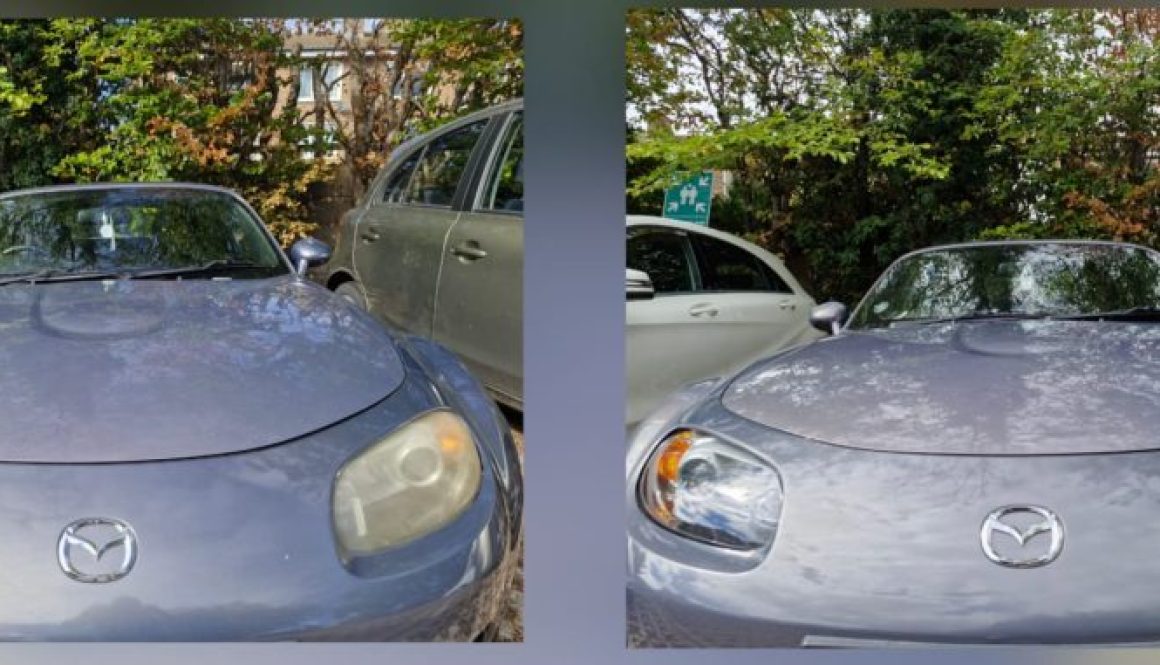
The Raw Truth About Yellow Headlights: Why Those Cheap Kits Leave You Squinting (And What Real Restoration Actually Does)
Pull up next to a well-kept motor that’s only five or six years old and the first thing that often gives the game away is the front end. Not the paint. Not the wheels. The headlights. That dull, yellow, milk-bottle haze that makes the whole car look like it’s been left in a field. It’s one of the fastest ways a solid car starts looking tired, and most drivers just live with it until the MOT man has something to say.
At Ben’s Cosmetic Car Clinic we’ve spent a lot of time looking at these lenses close up, on driveways and car parks across West Molesey, Elmbridge and the surrounding roads. The problem is almost never the headlight unit itself. It’s the outer polycarbonate lens. Modern headlights are tough, but the factory clearcoat that protects them is thin and, over time, it breaks down. UV, road grime, stone chips, winter salt spray and the constant wet-dry cycle of British weather all take their shot. Once that clearcoat fails, the plastic underneath starts to oxidise and the surface goes cloudy.
A lot of people try the £15 kit from the supermarket or the online “restoration in a bottle” approach. I’ve seen the results more times than I can count. For a few weeks it looks better. Then the haze comes back, often worse, because the surface has been softened or left porous. That’s not restoration. That’s a temporary polish with no real protection behind it. Proper work takes the damaged layer off completely and puts a durable UV barrier back on.
What Actually Happens in a Proper Multi-Stage Restoration
When we arrive for a headlight restoration we start with a proper inspection. Not every yellowed lens is a candidate. If the plastic is cracked, heavily pitted or the internal reflector is damaged, replacement is the honest answer. Most of the time, though, the unit is fine and the surface is the only problem.
We mask the surrounding paint and trim carefully. Then the work begins with progressive abrasive stages. This isn’t a single wipe-and-go. The first passes use coarser grits to cut through the failed clearcoat and the oxidised layer beneath it. You’re removing material, not just polishing the top. That’s the part most DIY kits skip or do poorly — they don’t take enough off, or they take it off unevenly, so the optical surface is still compromised.
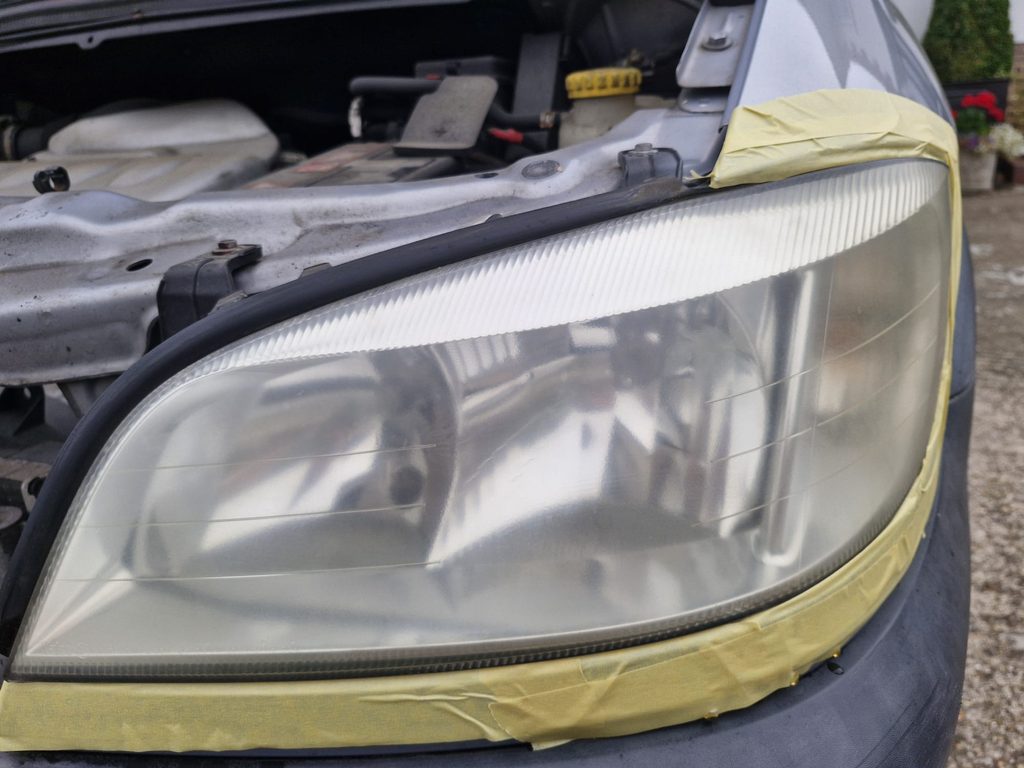
Once the damaged layer is gone, we move through finer and finer stages. Each step removes the scratches left by the previous one. By the time we reach the final polishing compounds the lens is optically clear again. Light can pass through without scattering. You can see the difference immediately under a torch or in daylight — the beam pattern sharpens and the yellow cast disappears.
The last critical stage is the UV protection. Without a proper sealant the freshly exposed polycarbonate will start oxidising again within months, especially in our climate. We apply a dedicated UV-resistant coating that bonds to the surface and gives the lens a new protective layer. It’s not paint. It’s a clear, durable barrier designed for exactly this job. Done right, the result lasts.
Why the Cheap Route Keeps Letting People Down
I’ve had customers show me headlights they “did themselves” six months earlier. The surface looks dull again, sometimes with swirl marks or a patchy finish where the compound didn’t cut evenly. The problem is usually one of three things: the oxidation wasn’t fully removed, the surface wasn’t refined properly, or there was no lasting UV protection. Some products even contain solvents that soften the plastic further, which speeds up the next round of deterioration.
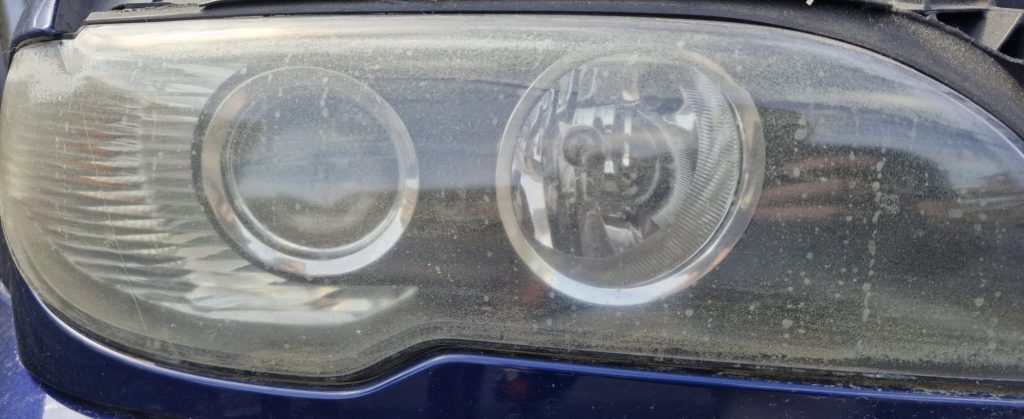
A professional multi-stage process controls the depth of material removal, the refinement of the surface, and the final protection. The difference shows up both immediately and months later.
Beyond Looks: Light Output, Safety and the MOT
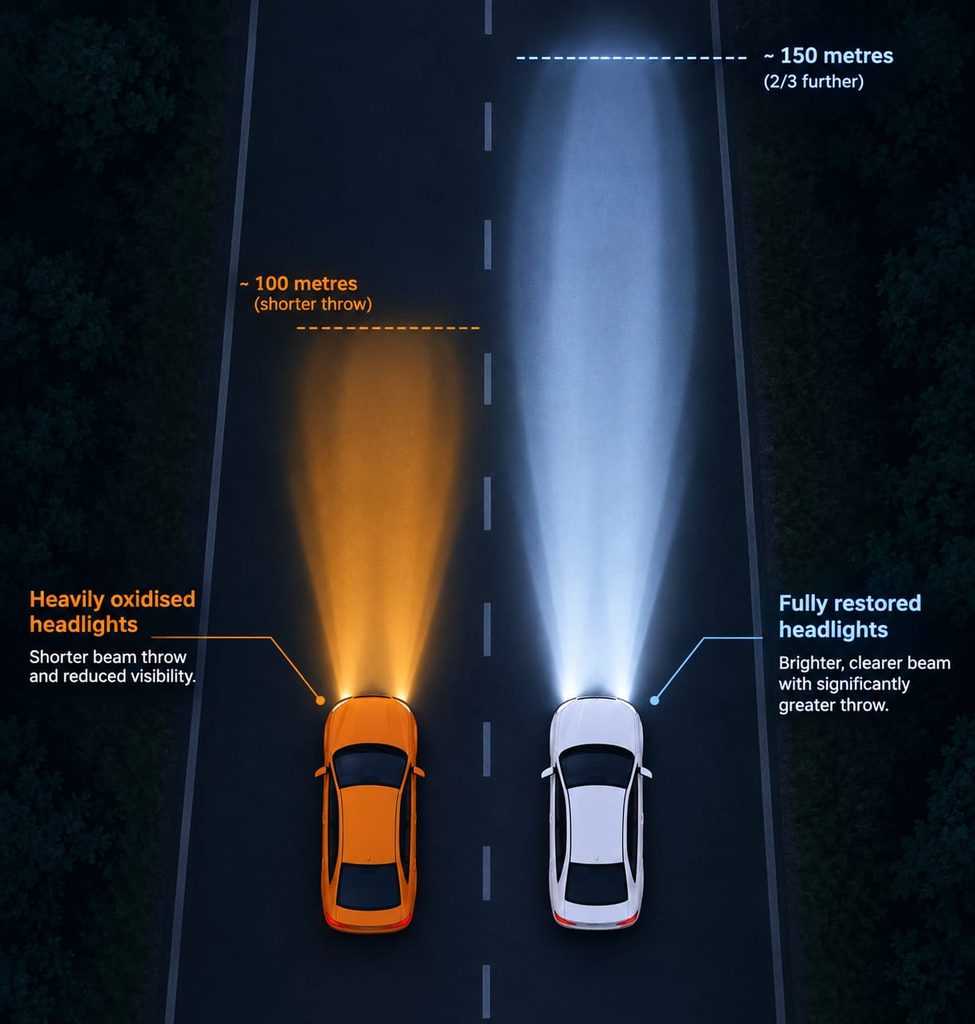
Clear lenses aren’t just about the car looking younger, although that’s a big part of it. Oxidised plastic scatters light. Instead of a clean, focused beam you get a diffuse glow that reduces effective range and can create glare for oncoming traffic. On unlit Surrey roads at night that difference is noticeable. Drivers often tell us after the job that they can see further and the beam feels sharper.
From an MOT perspective, a severely deteriorated lens can become a failure point if it significantly affects light output or beam pattern. Sorting it properly before the test is cheaper and less stressful than dealing with it on the day. And compared with buying a new complete unit — especially on cars with LED, Xenon or adaptive systems where a pair can run into several hundred pounds — the restoration route from £85 keeps the original headlights and still delivers the clarity.
Local Roads, Local Conditions
The roads around West Molesey, Walton, Esher, Thames Ditton and the wider Elmbridge area see plenty of wet weather, winter gritting and the odd stretch of dual carriageway where stone chips are common. Those conditions accelerate clearcoat failure. Cars that live outdoors or do a lot of motorway miles tend to show the problem sooner. Because we’re mobile, the work happens at your house or workplace. No garage drop-off, no waiting around, and the car is ready to drive as soon as the final checks are done.
After the Job
Once the UV protection is on, normal washing is fine. Avoid harsh abrasive cleaners or aggressive pressure washing directly on the lenses for the first few days while the coating settles. Beyond that, the restored surface behaves like a good factory finish. If you keep the rest of the car clean and the lenses free of heavy grime, the clarity holds. We still recommend checking them periodically, the same way you’d check tyres or wipers — it’s part of keeping the car looking and performing as it should.
If your headlights have gone that familiar yellow or cloudy and you’re tired of the car looking older than it is, the 20/20 Treatment is the straightforward fix. We come to you across West Molesey, Elmbridge and the surrounding areas, restore the lenses properly, and leave you with clearer light and a sharper front end. Book via benscosmeticcarclinic.com or get in touch for a quick look. No fluff, just the lights sorted.