The Eyes of the Car: Why Proper Headlight Restoration Changes Everything
The Eyes of the Car: Why Proper Headlight Restoration Changes Everything
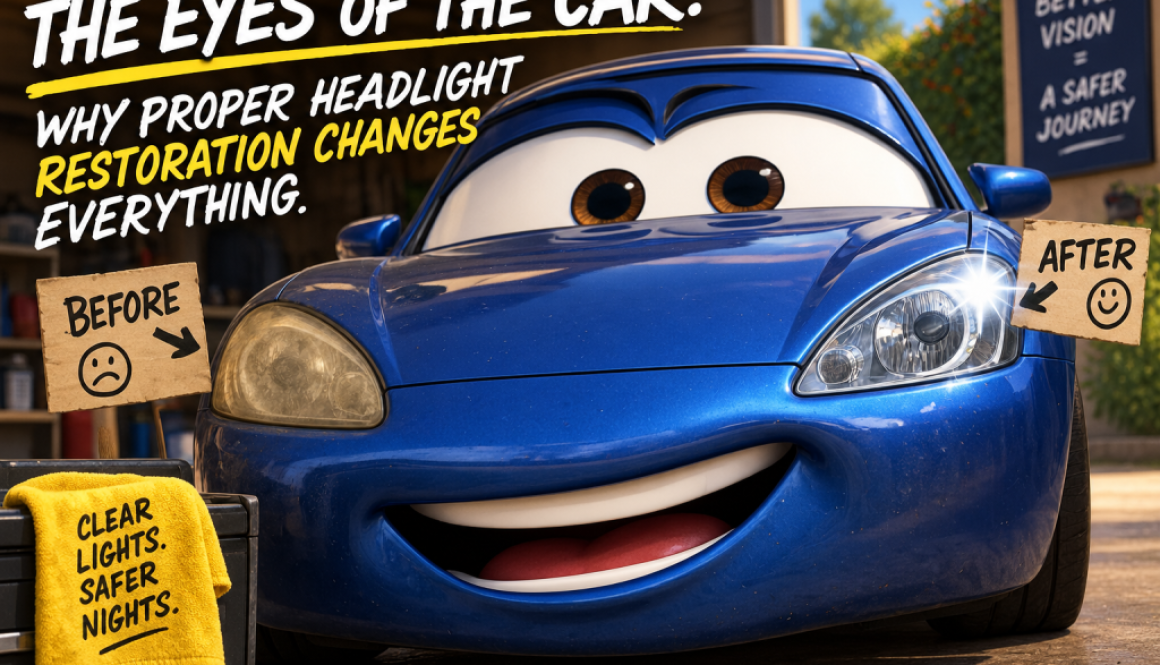
Your headlights are the eyes of the car. Same as a set of clear eyes on a face, they either look sharp and alive or dull and tired. When the lenses go cloudy, yellowed or milky, the whole front end ages overnight. People notice. You notice. And at night, when it matters, the light just doesn’t cut the same.
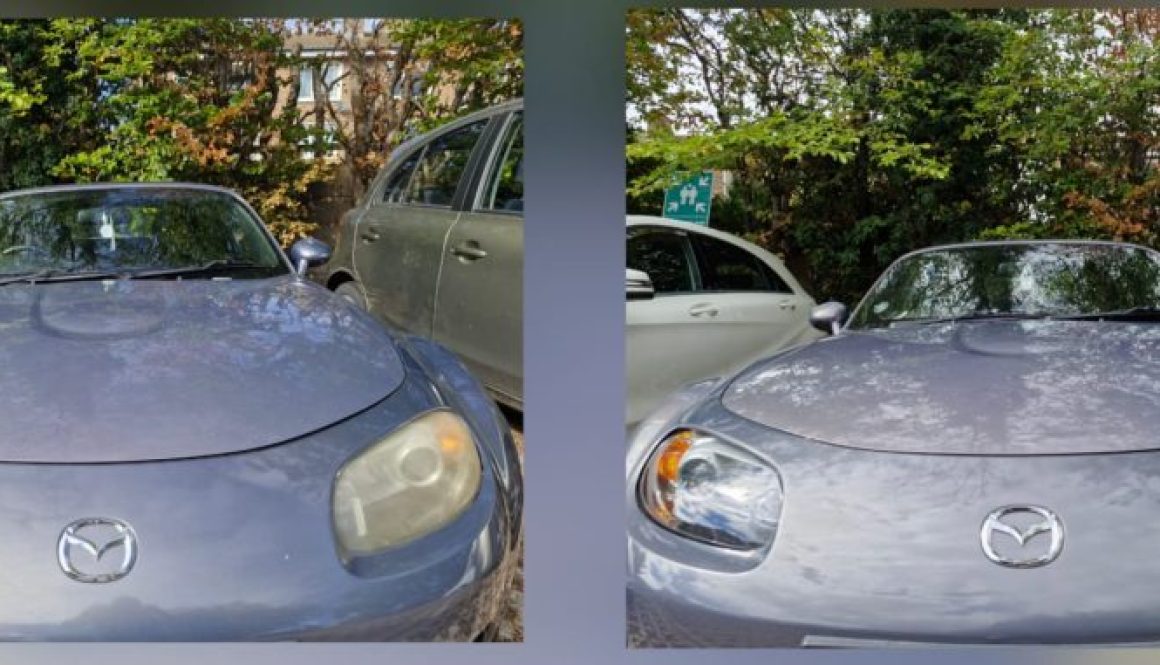
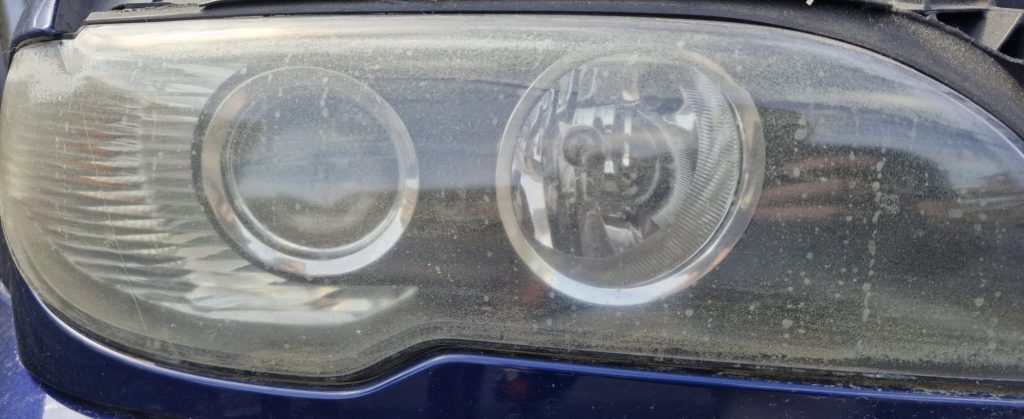
Most of the cars we see around West Molesey and across Elmbridge have the same issue. Modern headlights use polycarbonate lenses. They’re tough, light and formable, but they hate UV. The factory clearcoat breaks down. Oxidation sets in. Road grime, rain, salt and the odd car wash accelerate it. Before long the lens looks like it’s been sandblasted. The beam scatters instead of throwing a clean, focused pattern. Visibility drops. The car looks older than it is. And if it’s bad enough, it can fail an MOT on the grounds that the light output or beam pattern isn’t up to standard.
That’s the problem. The fix doesn’t have to be a full replacement.
Restore, don’t rip out
A lot of people assume cloudy headlights mean new units. On some cars that’s a couple of hundred quid. On others, especially ones with projector setups or adaptive systems, it can climb a lot higher. If the plastic is the only thing that’s failed, replacing the whole assembly is often unnecessary. The housing, reflector and bulb or LED module are usually fine. You’re just paying for a new clear cover and the labour to fit it.
Proper restoration removes the damaged clearcoat and the oxidised layer, then rebuilds a UV-stable surface. It’s not a quick wipe-on kit job. Those DIY kits can look okay for a few weeks if you’re lucky, but most of them leave the lens under-protected. The oxidation comes back faster the second time because you’ve thinned the plastic without sealing it properly.
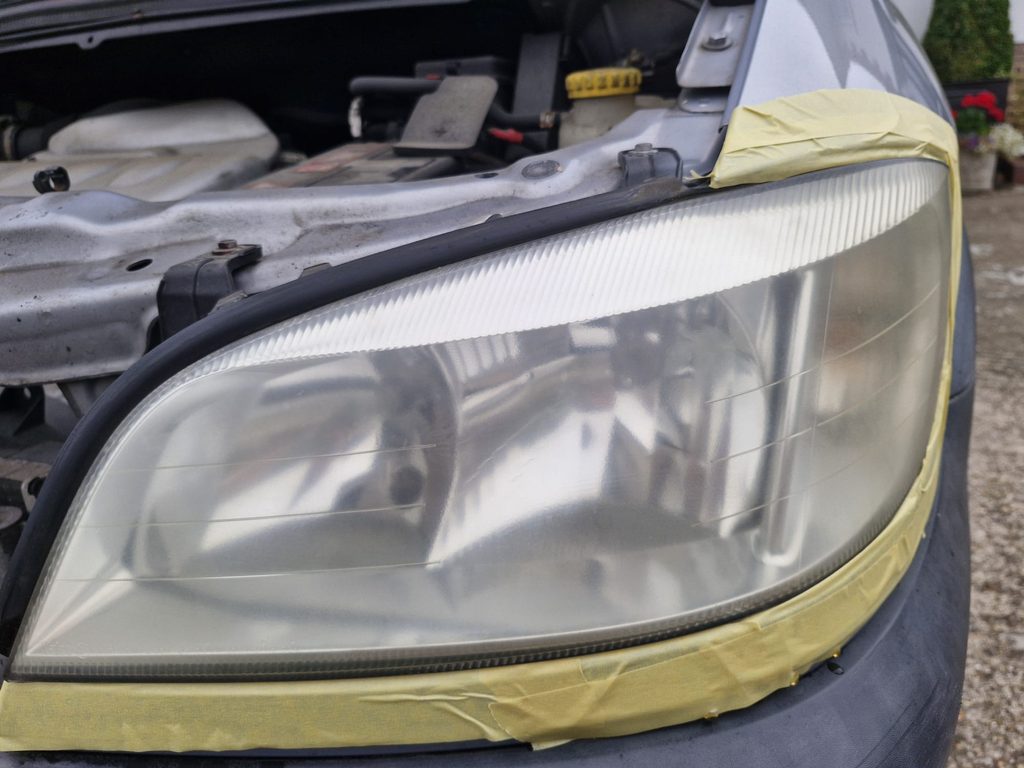
At Ben’s Cosmetic Car Clinic we call the proper job the 20/20 Treatment. It’s a multi-stage abrasive process. We start by carefully masking the surrounding paint and bodywork so nothing else gets touched. Then we work through a sequence of abrasives that remove the failed clearcoat and the bulk of the oxidation. Each stage cuts finer than the last. You’re not just polishing the surface; you’re taking the damaged material off so the remaining plastic is clean and consistent. Once the haze is gone and the lens is optically clear again, we apply a dedicated UV-protective coating. That seal is what keeps the result from fading back in a few months.
We come to you. Home driveway, workplace car park, wherever the car sits. No need to drop it off or hang around a workshop. The whole process is done on site and the car is ready to drive when we finish.
Why the multi-stage abrasive approach matters
Anyone can hit a lens with a single grit and a bit of compound and make it look better for a week. The difference is in the stages and the finish.
Early stages remove the bulk of the yellowed, oxidised material and any deep scratches or crazing. Too aggressive and you risk creating swirl or leaving the surface uneven. Too gentle and you never get past the damaged layer. The middle stages refine the cut so the plastic is level and free of heavy scratches. The final polishing stages bring the clarity back. Then the UV seal locks it in. Skip any of those steps and the result either doesn’t last or doesn’t look as clear as it should.
It’s the same principle as proper paint correction on a body panel. You don’t just buff the top; you correct the surface and then protect it. Headlight lenses respond the same way because they’re a clear plastic that has been compromised by UV and weather. Treat them like a cheap disposable part and they’ll behave like one. Treat them properly and they come back looking like they did when the car left the factory.
What you actually get
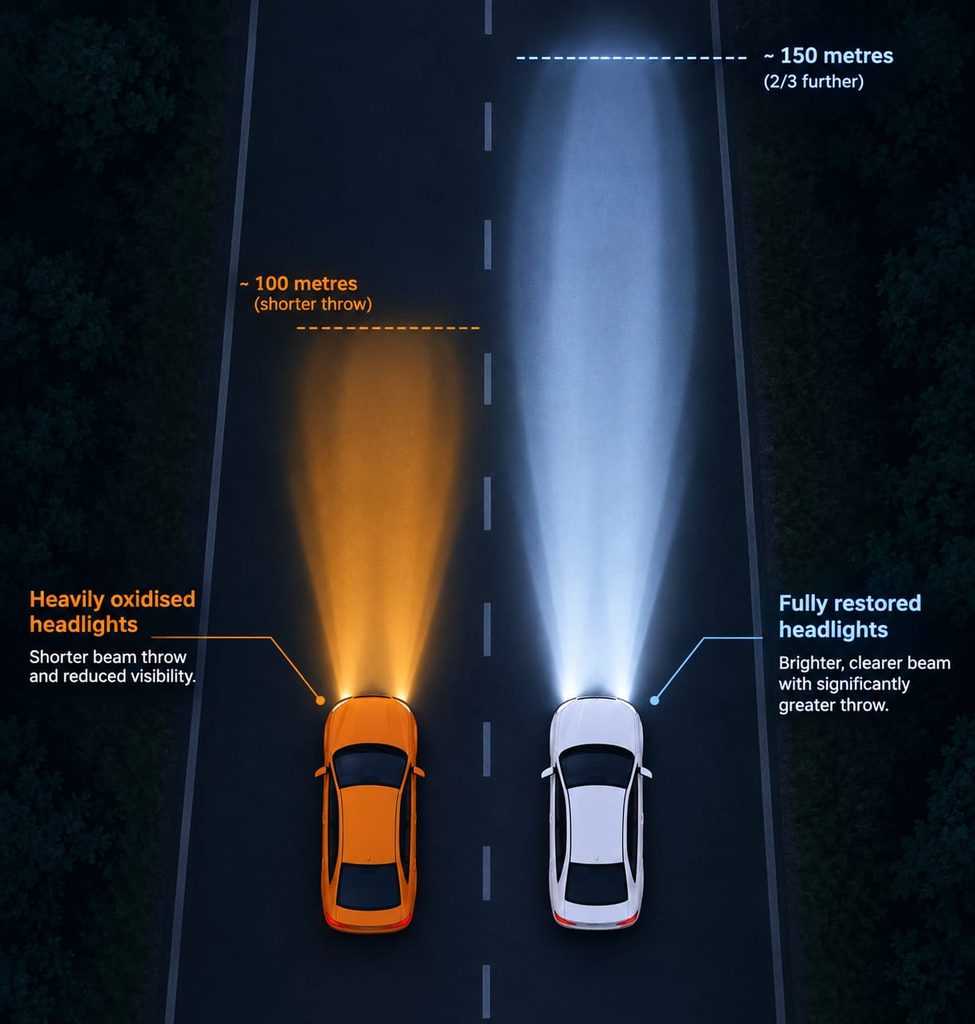
Clearer light output. When the lens is cloudy the light scatters in every direction. The beam becomes diffuse. Oncoming drivers get more glare from the scatter, and you lose useful range down the road. After a proper restoration the light goes where it’s supposed to. Night driving feels more confident, especially on unlit roads or in heavy rain.
The car looks younger. It’s the most immediate change. A pair of clear headlights sharpens the whole front end. On a lot of cars it’s the difference between “looks its age” and “still looks tidy.” That’s useful if you’re keeping the car, and it’s useful if you’re thinking about selling it. Buyers notice cloudy lights the same way they notice tired paint or cracked leather. Fixing them removes an easy objection.
You avoid the MOT risk. Testers check that the headlights produce a clear beam of the right intensity and pattern. Heavy yellowing or haze can push a car into a fail. Getting them sorted before the test is simpler and cheaper than dealing with it afterwards.
You keep the original units. On older or rarer cars, replacement headlight assemblies can be hard to source or can look slightly different from the originals. Restoration keeps the factory look while bringing the function and appearance back. Even on everyday cars, keeping the originals means no wiring issues, no coding, and no mismatch in finish between the two sides.
How long it lasts and what to expect
With a proper UV seal the result holds up well under normal UK conditions. Rain, winter grit and summer sun still happen, but the protected surface resists the oxidation that ruined the factory coating. We don’t claim it’s permanent forever—nothing is—but it’s a long way better than an unprotected lens or a quick kit job. Most customers see a clear, lasting improvement that keeps the car looking and performing better for years.
Price starts at £85 per pair for the 20/20 Treatment. That’s for the full multi-stage process and UV protection, done at your location. Compared with the cost of new units plus fitting, it’s usually a fraction of the price, and you keep the car looking original.
The practical side
We cover West Molesey, the rest of Elmbridge and the surrounding areas. Book a time that suits you and we turn up with everything needed. The process is clean and controlled. Masking protects the paint. The abrasives are used with care so the surrounding areas stay untouched. When we leave, the headlights are clear and the rest of the car is as we found it.
If your lights have gone yellow or hazy, take a look at them in daylight and then at night. The difference is obvious once you know what you’re looking at. Restoration is the straightforward way to put the eyes back in the car without replacing the whole assembly.
If you want it done properly, get in touch. We’ll come to you, sort the lenses, and leave you with clearer light and a sharper-looking car.