
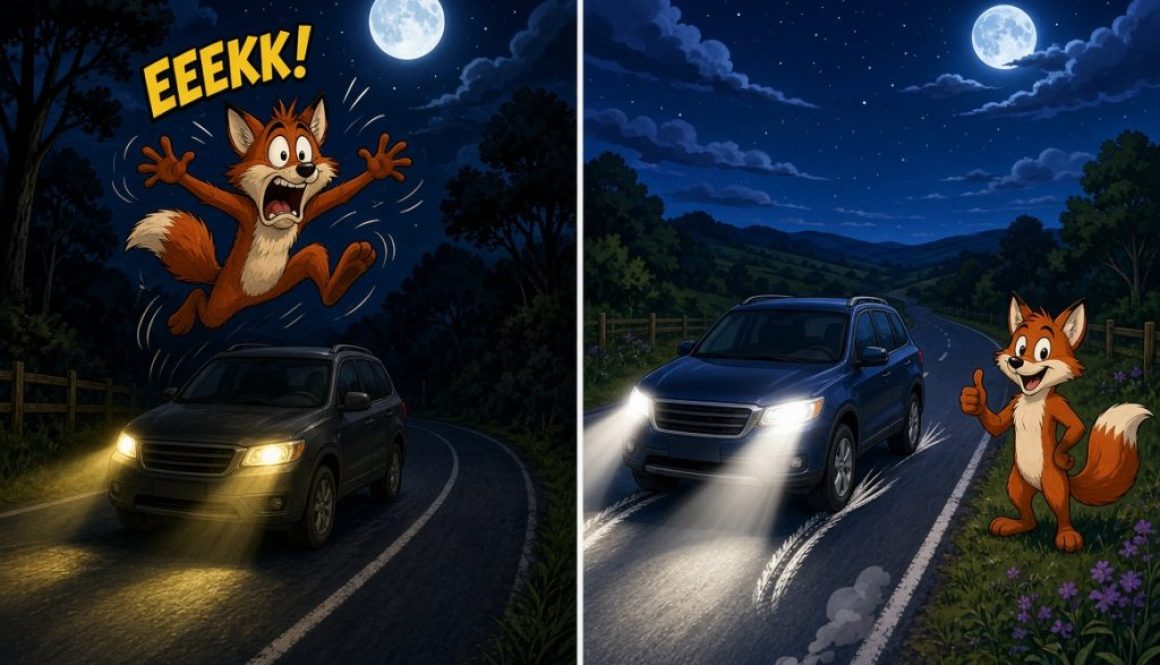
Why Cloudy Headlights Make Winter Nights Harder on Surrey Roads
Why Cloudy Headlights Make Winter Nights Harder on Surrey Roads Headlight Restoration Surrey
Right, let’s talk headlights before the proper long, dark Surrey nights set in.
You know that gradual yellowing and clouding that creeps onto plastic lenses? Most of us barely notice it because our eyes adapt. The light output drops slowly, the beam turns from clean white to a soft orange glow, and your brain just accepts it as normal. Until one night you’re driving somewhere familiar and realise you’re not lighting the road ahead anything like you used to.
Imagine heading home after dark along that unlit winding stretch next to Walton Reservoir — the one where kids are often out on bikes in dark clothing with no lights. A short, yellowish beam just doesn’t cut it. Restored headlights throw a clear white light much further down the road, giving you a proper view of what’s coming.
Heavily oxidised headlights can throw light roughly 100 metres or less. Properly restored ones push closer to 150 metres — about two-thirds further. That difference matters on the quieter, poorly lit lanes around Walton-on-Thames, Hersham, and the surrounding Surrey roads, especially when the nights are long and the surfaces are wet.
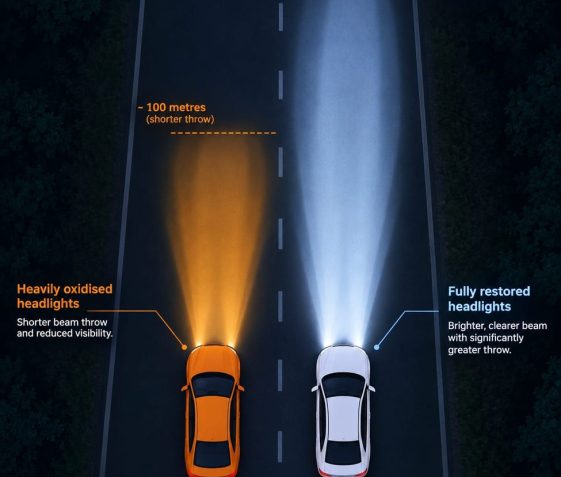
The orange glow doesn’t just look weaker — it illuminates less detail. Road markings, pedestrians, cyclists, and the odd deer become harder to pick out early. Your eyes have got used to the reduced output, so you don’t feel the problem until something suddenly appears closer than it should.
Winter makes it worse. Longer darkness, rain, leaves, and greasy surfaces already stretch stopping distances. At 30 mph the Highway Code gives you about 23 metres total stopping distance in the dry. In the wet that roughly doubles. If your beam is already shorter and murkier, the margin for spotting and reacting shrinks further.
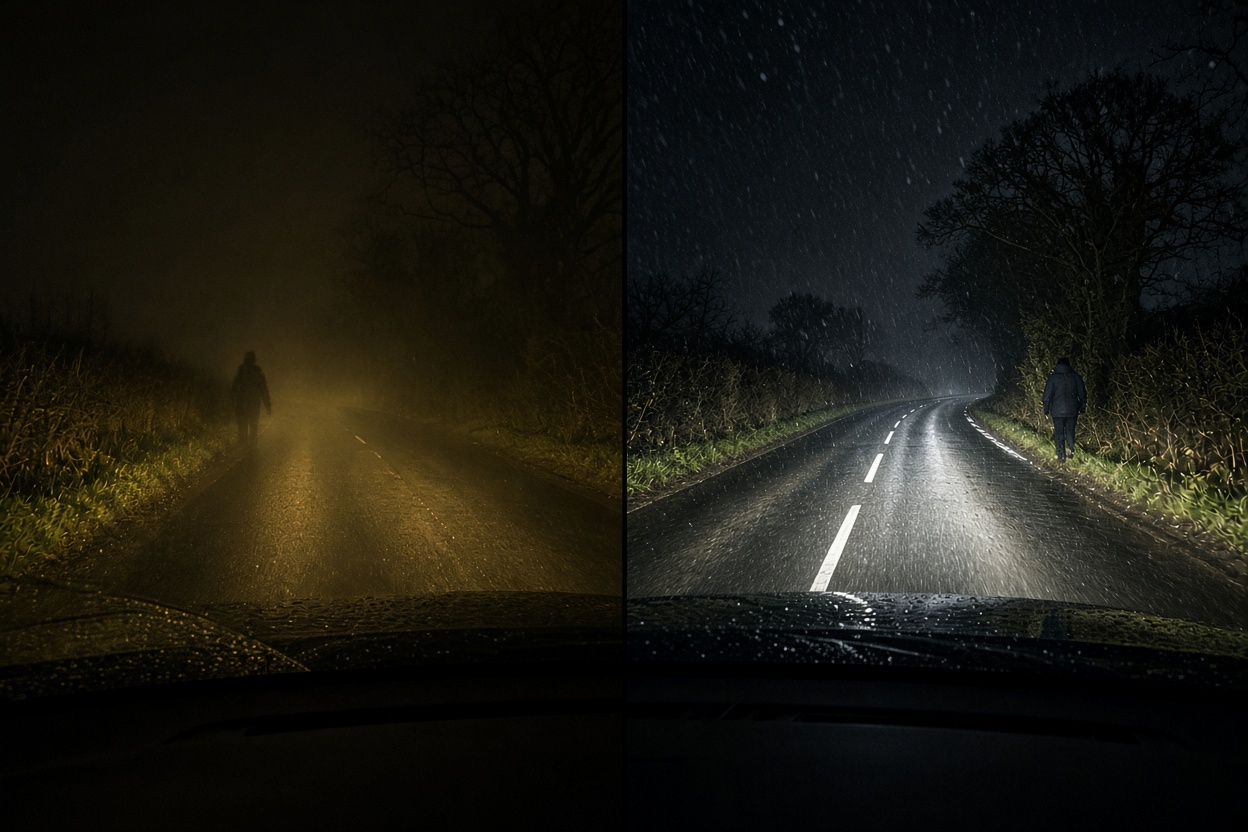
A common figure from testing is that badly clouded lenses can drop light output to around 20–22 % of a new set. That’s not a small difference — it’s the equivalent of driving with most of the power switched off. The gradual nature is what catches people out. You don’t wake up one morning with terrible lights; they just quietly get worse over months and years.
The good news is it’s a straightforward fix. Proper restoration removes the oxidised layer and seals the lens with a dedicated UV-stable clear (not generic bodywork 2K). The result is a bright, white beam again — closer to how the car left the factory — and it lasts properly when the right products are used.
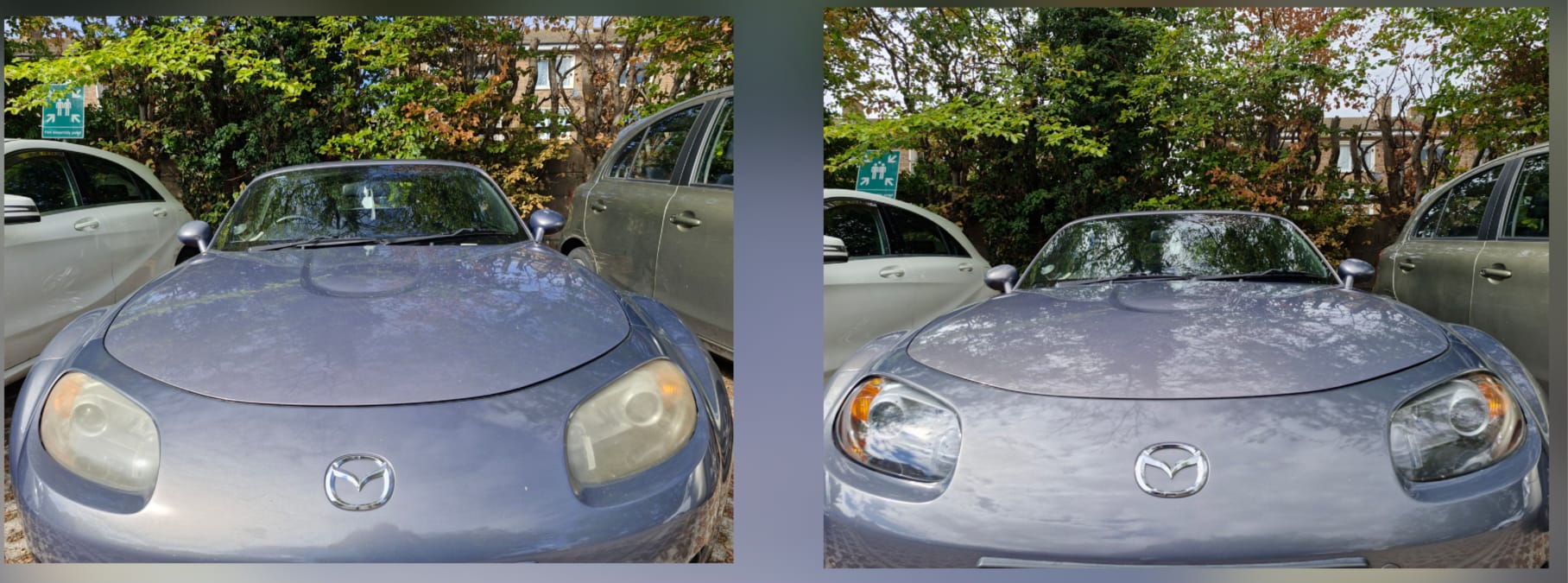
If your headlights are looking more amber than clear, now is a smart time to sort them — before the clocks go back and every drive around Walton Reservoir, the M25 approaches, or the darker local lanes feels that bit harder.
Clearer light, better view of the road ahead, and you stop having to compensate without realising it. Simple win for safer winter driving in Surrey.